Showing posts with label explaining the rules. Show all posts

Saturday, June 13, 2009

Number One Stunnas


Image via AP

(#11) West Indies 156/3 (#1) India 153/7

That with Chris Gayle being held to 22 runs off of 28 balls (a terrible rate for one of the world's best players).

That being mostly the same West Indies team that is coming off an embarassing performace against England, in both Test and ODI's.

That team being ranked next to last for the 12 teams in the tournament, and have come flying out of the gates ever since.

I won't lie, I don't know when the new ICC rankings come out again, but I can tell you one thing, they won't see the West Indies in 11th place, even if they did lose to South Africa just before I started to write this.

Dwayne Bravo was the star of the show going for 66 runs (anything above 50 is a pretty good effort for 20 overs) as well as bowling four of India's seven wickets.

That's right Fidel Edwards, Number One Stunners

Thursday, June 11, 2009

Alright I'll say it, I'm a bad blogger, it's been exactly three weeks since my last post, and here we are in the middle of the international tournament of the year (since we're in a down year for the ODI tournaments) the ICC World Twenty20 Championship (..of the World). I want to mix things up a little, so lets try this in FAQ form.


Q: Who qualified for the tournament?
A: The top ten teams in the ICC's world rankings, plus the top two finishers from the Qualifying Tournament. However, because it is a corrupt political entity, Zimbabwae was forced out of the tournament. and was replaced by the third place finisher in the Qualifying Tournament. This is how they're ranked.

1) India
2) Pakistan
3) Austrailia
4) New Zealand
5) South Africa
6) Sri Lanka
7) England
8) Bangladesh
9) Ireland
10) Netherlands
11) West Indies
12) Scotland

Q: Wait, 12 teams, how do you set up a single elimination tournament that way?
A: You don't. Instead, they have four pool groups each consisting of one first tier, one second tier, and one third tier team. You go by ranking. So you get four groups that look like this:

1-8-9
2-7-10
3-6-11
4-5-12

Q: What have we missed so far?
A: So far you've missed the pool play I just mentioned.

Q: Any Suprises?
A: Austrailia went quietly into the night losing to the West Indies 172-169 (in a match where WI only sent 5 batsmen to the stumps), and losing to Sri Lanka 160-159 (this time only 6 Batsmen for SL). The Netherlands were elimnated in heartbreaking fashion when they were only able to put up 93 runs against Pakistan to allow England to move on to the Super Eight.

(and let it be stated here that I am glad for Bloggers autosave feature that allowed this to still be here when my computer shut down on me)

Q: Super Eight? What's that?
A: The Super Eight is the second round of the competition and it started today (South Africa 114-England 111, and New Zealand 198-Ireland 115 for those keeping track at home) It is two groups of four (the first and second place finishers from the four opening round pools. Each plays the other three in the pool, and the top two from each pool move onto the semi-finals.

Q: Anything else we should know?
A: If you want to learn about cricket, 20/20 is probably the best way to do it, it's the shortest game, has the fasting pacing, and is the only version of the sport played at night. If you've gotten into the sport at all through this, first off that's nice, cause hey, I've accomplished something. Second, you might want to take the next step up, and learn about Net Run Rate, which is the first tie-breaking tool, and will save you a lot of confusion (if you're good at math). Finally, enjoy the games! They're in England, so you can have cricket with your breakfast (Game one Tomorrow starts at 6:30 EDT, and Game two starts at 7:30 PDT, so there are options for everyone.)

Saturday, May 2, 2009

I'm Still Alive, and the happy Afghan story no one is telling.

*blows the dust off*

Sorry about that, school and work have gotten the better of me lately, I often come home, eat dinner and go to sleep, so a month has flown by since I wrote anything (and I left an embittered taste in all of your mouths anyways) I'm back, and just in time, because The Qualifying tournament for the 2011 ICC World Cup just finished (yeah, that's how it is in the cricket world, we get shit done two years in advance) It's a good thing too, since 2015 qualifying starts up this month!

Here's the basic lowdown:

*Ireland won the tournament (I would like to do a serach for a "Bowl Me: I'm Irish" pin, but I don't think I'd get what I want)

*Canada came in second, and qualified for the World Cup (which is an ODI tournament held every four years) along with Ireland, Kenya, and the Netherlands.

*Along with the four Qualifiers Soctland and Afghanistan were granted ODI status for four years (which means they can play ODI's against test nations, which is two steps below full test status)

That brings me to the other half of the title. For a nation that has been suffering through so much strife and turmoil, the media has been jumping at the chance to say "Look at this, they're getting on the right track." They tried their hardest to do so in Beijing, only to have a very unlucky Afghan contingent in the games. Here we are six months later, and everyone has decided to completely ignore that the cricket team has turned it around so much, they've been told they're one of the 25 best teams on the planet, and get to play with the big boys, and get extra funding from the ICC, and NO ONE SAYS A DAMN THING. It's a crying shame, I congratulate you Afghanistan, that was an impressive accomplishment, I know you can do great things, and now you have four years to prove it!

Sunday, January 18, 2009

This is Cricket-Fielding

Finally, the last part in our series fielding, or what it takes to make that groundball only be worth 1 or 2 instead of 4 or 5.

Saturday, January 17, 2009

This is Cricket- Catching

Before I start today, I'd like to say that one of my favorite bloggers is in need of help, if you'd like the full story, go to http://www.midmajority.com/2009/01/the-sports-bubble.php#more and if you're able to do something, that would be awesome too, even if it's a google clickthrough.

Today, we're going to cover what happens if you make contact with the ball, but you don't do it well. That's right, it's all about catching (which, yes is all barehanded).

Friday, January 16, 2009

This is Cricket- Wicket Keeping

Well now that we know how the ball gets there, and what you're supposed to do if you've got a bat in your hand and the ball is coming at you, lets see what happens behind you if you miss the ball.

Thursday, January 15, 2009

This is Cricket-Batting

It seems like the next logical step after bowling would be to show what you do once the ball gets there, so here it is, batting. (Warning, this is not for those who hate 12-pitch baseball at bats)


Also, if there is anything that isn't covered in the videos, one should just ask in the comments, and I'll do my best to give you an answer.

Wednesday, January 14, 2009

This is Cricket- Bowling

Now that we've had a chance to understand the basics, let's expand a little further, and discover how the ball gets from one stump to the other, and the many ways it can get there.

Tuesday, January 13, 2009

This Is Cricket (Sorry if you were looking for Sparta)

After having a conversation with one of the readers of this blog last night, it has come to my attention that some of my readership may be just smiling and nodding in polite agreement and have no idea what I am saying at all. I would like to spend the rest of this week trying to allieviate that. So now for you, is part one of "This Is Cricket" where you will learn all the fundamentals of how to play the game.


Obviously you can go on on your own if you so choose, but I will spend the rest of this week putting up those videos one at a time, so hopefully people will be able to better understand what I'm talking about.

Thursday, November 20, 2008

Bats Balls and Wickets

So it's been a few days, sadly, unless you really really love Austrailia and the Indian Subcontinent, you haven't missed much, as they're the only ones who are getting any action in to speak of (as I write this we have Austraila-New Zealand and South Africa-Bangladesh test matches taking place live) so I thought it would be nice to delve into some of the more bells and whistles aspects of the game, mainly, what they play with.

The way I've always described cricket bats is they're a cross between a faternity paddle and a field hockey stick. The batted side is flat, and the opposite side is curved to help get lift under the ball. (http://upload.wikimedia.org/wikipedia/commons/6/60/Cricketbatparts.jpg)

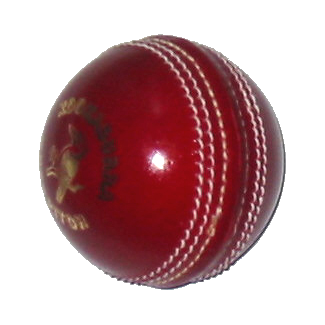
Balls are filled with cork in the middle and wrapped with a hard leather shell (I'm not sure how to convert that into a more recognizable form, so we'll just go with wikipedia) the hardest throwers can throw it 85 to 90 mph ON A HOP. In case I failed to mention the ball has to bounce once before it reaches the batsman, otherwise it's a no ball (the throw doesn't count and the batting team is awarded a run) (http://upload.wikimedia.org/wikipedia/commons/b/b0/Cricketball.png)

Wickets are esstially the bases for cricket. They look like the wickets you would use to play croquet, only there are three of them lined up together and on top of them rest two bails, which allow you to know when the wickets (or stumps) are balanced. If someone is to cross out of their zone, you can get them out by jarring the wickets and knocking the bails off (the offical name for an out is "the fall of a wicket")

In order to get an advantage on running out a hit, the batsmen will step foward when they swing at the ball, so if they miss and it knocks the wicket over they will be out, because they were definately outside of the box.

Saturday, November 8, 2008

I missed something...

You know, it dawned on me that it would probably help if I explained A) how teams can score, and what a Cricket field looks like beyond "a glorified bocce court". In premise cricket works a lot like baseball (quite frankly, baseball is a cricket rip-off geared towards people with short attention spans) Cricket fields are giant circles with a rectangle in the middle (like this: http://upload.wikimedia.org/wikipedia/commons/thumb/2/2c/Cricket_field_parts.svg/545px-Cricket_field_parts.svg.png) The bowler runs up from one side reaches the line, and bowls, and it's the batsman's job to try and hit it, the next part is highly based on strategy, as the fielders have to guess where the batsman will try and hit the ball (there are no set positions, in fact there are actually more rules as to where you can't stand than there are to where you can) on the outside of the big circle is a barrier, probably about three inches high. When the batsmen hits the ball he takes off running towards where the ball was just bowled from, he has a team mate who starts from where the batter bowled and starts running the other way, every time they reach the opposite side, that's one run.

They can run back and forth as often as they feel it's safe, there are three exceptions to the rule:
1) If the ball is caught on the fly, then that's a fall of a wicket (an out) and there is no running (cause the batsman is out, so his partner no longer has a partner).
2) If the ball rolls all the way to the barrier, or clears the barrier on the hop, that's a barrier, and it's worth 4 runs. Here are a bunch in a row:


3) If the ball clears the barrier on the fly, it's a six. Shivnarine Chanderpaul shows us how it's done in dramatic fashion.


Essentially, that's it for all the ways you can score, and that was your first introduction to the West Indies team, who I will explain in greater detail next time.

Thursday, November 6, 2008

Test Cricket and ODI's

Since this site doubles as an explanation to the sport to people who have never even seen it before, it seems as though a proper explanation of the two types of cricket I have failed to mention so far goes in here.

ODI is short for One Day Interational, and is the most common version played on an international level. Unlike 20/20 which is one innings (yes the singular is plural, I've never tried to understand it either) with 20 overs (estinally overs are the baseball equivilent to an inning) ODI's have 2 innings usually 40 or 50 overs depending on the agreement between the two sides. From there, there's a coin filp (as there is in all forms of cricket) and winner decides to bat or bowl first. From there, it's standard cricket (which is complicated enough that it will probably get it's own post at some point).

Test Cricket, is simply put, what's killed any chance at all of cricket being a major sport in the west (with a notable exception I will cover next time). Test Cricket is the top level of Cricket in the world, unforuntately, one Test Cricket match can take up to 5 days to play. They only play during the day (20/20 is the only cricket that's played at night) and they stop in the middle of whatever they are doing once the sun goes down. It's required both teams wear entirely white during a test match, and since it istop level cricket, you actually need to show that you're able to play it, by winning your way up to the right, and being approved as a full member of the International Cricket Council of which there are currently only 10 members: England, Austrailia, New Zealand, The West Indies, India, Pakistan, Bangladesh, Sri Lanka, South Africa, and Zimbabwae. (for those who are curious the United States and Canada are associate members, and can only play ODI's if they reach World Cricket League Division 1, but for which Canada has an exception to play until next year).

The major problem with test cricket is it's never ever going to translate for tv, they play for 8 hours at a time, with one 30 minute tea break during the match, and an hour lunch break. How would you take any commerical breaks for a show that almost never stops?

Wednesday, November 5, 2008

South Africa V Bangladesh

Well speak of the devil, I pointed out the exsistance of 20/20 Circket and it turns out there was a 20/20 match today between South Africa and Bangladesh (much like during the Olympics the best Cricket sides happen to be in time zones earlier than ours, so most major contests are done before we've even had lunch) and it also gives us the chance to look at one of the quirky aspects of cricket.

Like baseball, Circket has to stop for rain (since it's played on a glorified bocce court in most cases) unlike baseball, they won't make us wait 3 days before we can dertermine the winner, cricket has a method called the Duckworth-Lewis Method (D/L Method for short) in which if the game is interrupted for weather, a mathematical formula is used to determine how the team would have done if played under normal conditions in todays SA-Bangladesh match, the match was hampered by rain, and so the D/L Method was brought in to the final total. South Africa socred 118 runs in 20 overs in which they were assumed runs on three occsions due to the rain. Because of this, despite the 9 run difference, the final score states that South Africa won by 14 runs, because in ideal conditions, they would have scored more.

(final scores are determined by whether the winning team batted or bowled (pitched) first, if you bat first and win, you win by the difference in runs, if you bat second and win, you are said to have won by the number of wickets (outs) you had remaining)

This is all a very long way of saying South Africa 118 Bangladesh 109, and congrats to Abdur Razzak of Bangladesh as player of the match.